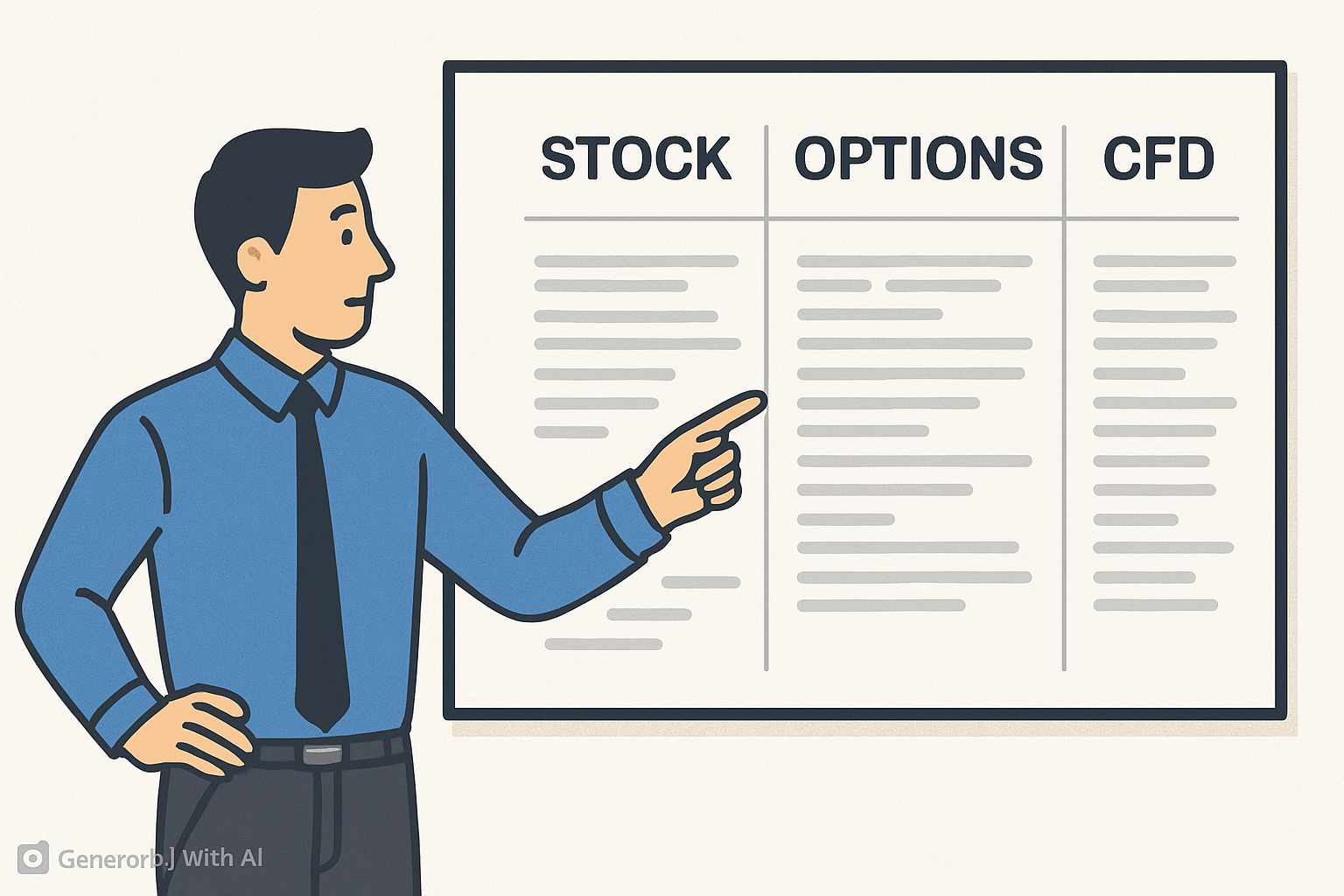
Stocks vs Options vs CFDs: Choosing the Right Investment Tool
Investors and traders have a variety of financial instruments at their disposal, with stocks, options, and contracts for difference (CFDs) being three of the most popular choices. Each has its own advantages and drawbacks, depending on an individual’s financial goals, risk tolerance, and market outlook. Understanding the benefits of these instruments is crucial for making informed investment decisions.
The Case for Stocks
Stocks represent ownership in a company, offering long-term growth potential and dividend income. Investors who purchase stocks directly benefit from capital appreciation if the stock price rises, as well as dividends if the company distributes earnings. Stocks are generally a preferred choice for long-term investors due to their relative stability and ability to generate wealth over time. However, stock investments require significant capital, and gains are limited to the stock’s price movements.
Why Options Provide Flexibility
Options offer traders greater flexibility and leverage compared to stocks. They allow investors to control a larger position with a smaller capital outlay by paying a premium for the right (but not obligation) to buy or sell an asset at a predetermined price. This makes options attractive for hedging and strategic trading, as they can be used to generate income, manage risk, or speculate on price movements. Additionally, options limit downside risk to the premium paid, making them a valuable tool for risk-conscious traders.
The Advantages of CFDs
CFDs are derivative instruments that allow traders to speculate on price movements without owning the underlying asset. Unlike stocks, CFDs enable both long and short positions with leverage, meaning traders can profit from rising or falling prices with less capital. This makes CFDs ideal for short-term trading strategies, such as day trading or swing trading. However, leverage can amplify losses as well as gains, increasing the overall risk of trading CFDs.
Comparing Risks and Costs
Each instrument carries its own set of risks. Stocks have lower risk in terms of leverage but require significant capital and can be volatile. Options provide controlled risk due to limited losses but require understanding of complex strategies and expiration dates. CFDs, while offering high leverage and flexibility, expose traders to risks like margin calls and potential losses exceeding the initial investment. Furthermore, trading costs, including commissions and spreads, vary across these instruments and can affect profitability.
Choosing the Right Instrument
Selecting between stocks, options, and CFDs depends on an investor’s risk tolerance and strategy. Long-term investors seeking steady growth and dividends may prefer stocks, while traders looking for strategic flexibility might favor options. Those interested in leveraged trading with short-term strategies could find CFDs more suitable. Regardless of the choice, understanding each instrument’s benefits and risks is key to optimizing trading and investment outcomes.